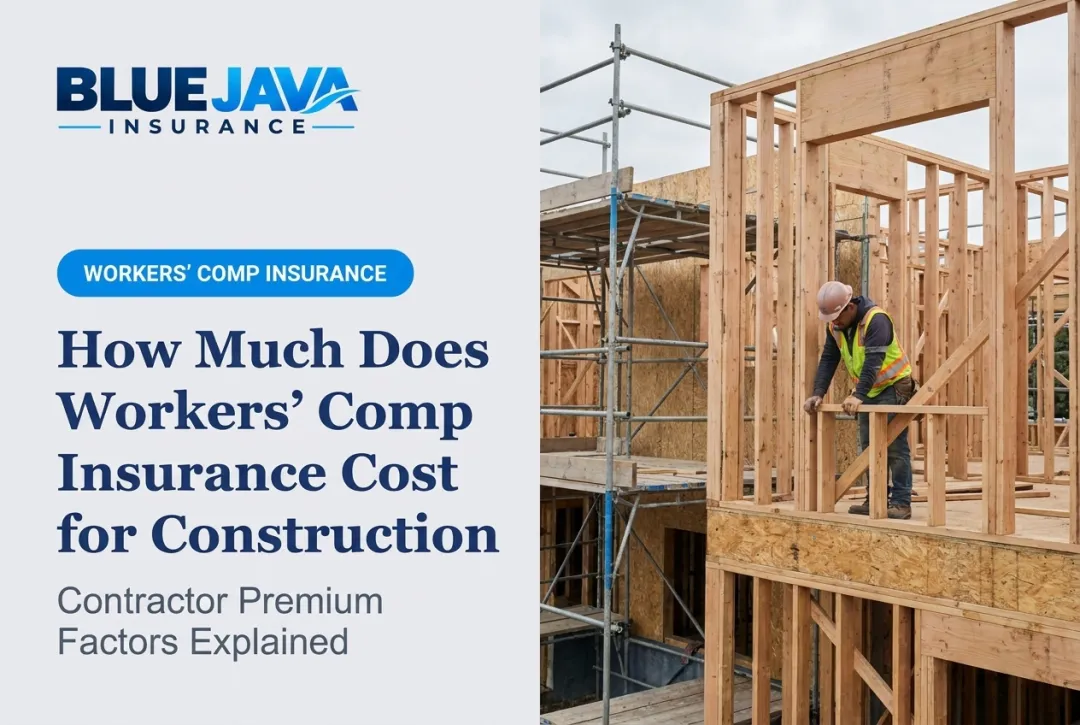

Construction is a risky business. The Bureau of Labor Statistics recorded 1,064 construction fatalities in 2024, and nonfatal injury rates still run at 2.2 recordable cases per 100 full-time workers. Requirements also vary by state, trade, business structure, and contract.
This guide covers the main coverage types, the policies people confuse, and what to review before you buy.
Key Takeaways
- Contractor insurance is a set of policies matched to your trade, crew, vehicles, tools, and contracts.
- General liability and workers' compensation are the usual starting points.
- An LLC or sole-proprietor status doesn't determine your coverage needs.
- Check exclusions, completed operations, additional insured wording, and state rules before work starts.
What Is Contractor Insurance and Why Is It Important?
Contractor insurance is a combination of commercial policies that address the financial risks of construction, repair, installation, and maintenance work. Each policy responds to a different category of loss:
- Liability coverage handles third-party bodily injury, property damage, and certain personal and advertising injury claims.
- Workers' compensation covers employee work injuries under state rules.
- Auto, tools, property, and professional liability cover vehicles, equipment, premises, and professional errors.
Insurance vs. surety bonds
Insurance transfers covered losses to an insurer. Bid, payment, and performance bonds are different. As the SBA explains, they guarantee things like payment to suppliers or completion of a contract, and the contractor may have to reimburse the surety.
Why it matters day to day
Owners and general contractors often require proof of coverage before you bid or step on site. Coverage also protects cash flow and pays for legal defense when a claim lands.
Being licensed, incorporated, or paid on a 1099 doesn't mean you're adequately insured. The SBA notes that an LLC's personal asset protection has limits, and insurance fills the gaps. Check your state agency for current rules.
Picture one remodel. An employee is hurt (workers' comp), a customer's floor is damaged (general liability), the work van is in a collision (commercial auto), and a defect surfaces after completion (completed operations). Four claims, several policies.

Types of Insurance Contractors May Need
What you need depends on your trade, project size, employees, equipment, driving, design responsibility, subcontractor use, and contracts.
Core liability, employee, and business protection
- Commercial general liability (CGL): The primary policy for many contractors. Under standard ISO forms, it covers bodily injury, property damage, and personal and advertising injury. It generally doesn't pay to fix your own faulty work or cover your own property.
- Workers' compensation and employers liability: Covers medical care and partial lost wages for work injuries. Thresholds, owner exemptions, and subcontractor rules vary by state: North Carolina generally starts at three regular employees, Florida construction at one, and some states can hold you responsible for uninsured sub crews.
- Products and completed operations: Responds when injury or damage shows up after the job is finished. Standard forms exclude your own work, and a subcontractor exception can be removed by endorsement.
- Business owners policy (BOP) or commercial property: For contractors with an office, shop, or inventory. A BOP bundles liability, property, and business interruption for eligible businesses, though equipment coverage varies.
Vehicles, tools, equipment, and property
- Commercial auto: A personal auto policy generally doesn't cover business-owned vehicles. Hired and non-owned auto matters when employees drive rentals or their own cars on the job.
- Inland marine / tools and equipment: Covers tools, mobile equipment, and materials in transit. Review theft limits, unattended-vehicle storage, deductibles, valuation (replacement cost vs. actual cash value), and excluded equipment.
How they differ: equipment coverage follows eligible tools and mobile property. Commercial property protects your premises and contents. Builders risk covers a building under construction during the build.

Project-specific and specialized coverage
- Umbrella or excess liability: Adds limits above your underlying policies. Contracts, asset exposure, and project size drive the number, and no universal limit exists.
- Professional liability (E&O): For contractors who design, consult, inspect, or write specifications. General liability is built for bodily injury and property damage, not bad advice.
- Contractors pollution liability: Needed for fuel, mold, hazardous materials, or waste work. General liability and property policies commonly exclude pollution.
- Builders risk: For new construction or major renovation. Your contract should define who buys it, what's covered, and when coverage starts and ends. AIA's A101 exhibit defaults to owner-purchased unless assigned to the contractor.
- Employment practices liability and cyber: Conditional options for growing firms with staff or sensitive data.
- Surety bonds: A separate contractual requirement for certain bids and public work, not another liability policy.
How to Choose the Right Contractor Insurance
The right program fits your real operations, legal obligations, and ability to absorb an uncovered loss. The cheapest quote or the longest coverage list rarely delivers that fit.
Start with your work profile
- Trade, services, job locations, and height or excavation exposure
- Residential vs. commercial work, and any design responsibility
- Whether risk continues after completion
- Employees, owners, temps, subcontractors, payroll, vehicles, tools, and premises
Accurate details matter. Payroll and revenue estimates drive pricing, and final audits can produce extra premium or a refund.
Match coverage to legal and contract requirements
Licensing rules are specific. California's CSLB requires a $25,000 license bond, and New Jersey home improvement registration requires at least $500,000 per-occurrence CGL. These are compliance minimums, not recommended limits. Review client contracts for additional insured wording, waivers, and bond obligations too.
Evaluate the policy itself
- Exclusions, deductibles, per-occurrence and aggregate limits
- Completed operations terms and subcontractor limits
- Territory, and whether each service you perform is covered
- Occurrence vs. claims-made triggers
Compare insurers
Weigh more than price:
- Claims support and how audits are handled
- Renewal process and turnaround on certificates and endorsements
- Carrier financial strength
Blue Java Insurance is an independent agency, not tied to one carrier. It can help contractors explore general liability, workers' compensation, commercial auto, professional liability, and business owners policy options through a human-supported process built around how the business operates.
What to Check Before Finalising Coverage
What to Check Before Finalizing Coverage
- Don't assume "bonded and insured" means covered. An LLC, sole-proprietor status, or 1099 arrangement doesn't confirm you have required coverage.
- Read the paperwork. Review declarations, forms, endorsements, exclusions, limits, and dates. Confirm the named insured, trade description, locations, and vehicles are right.
- Understand certificates. An ACORD 25 is informational only and doesn't amend coverage. Additional insured status needs an endorsement, such as CG 20 10 for ongoing operations or CG 20 37 for completed operations.
- Cover your subs. Confirm subcontractor arrangements are addressed and certificates stay current throughout the project.
- Don't buy on premium alone. Underinsurance, missing endorsements, exclusions, understated payroll, and lapses can sink a claim or cost you a contract. Florida treats concealed payroll as grounds for a stop-work order.
- Set a review schedule. Revisit coverage at renewal and whenever you add employees, vehicles, tools, services, states, or design responsibilities.

Conclusion
Most contractors need a combination: liability, workers' compensation, auto, tools and equipment, property, and sometimes professional, project-specific, or excess coverage.
The best program reflects your actual work, state rules, contracts, risk tolerance, and growth plans. Review it with a qualified insurance professional before you start work or change operations.
Frequently Asked Questions
What insurance do I need as a general contractor?
Typically general liability, workers' compensation when you have employees, commercial auto, and tools and equipment coverage. Depending on your work and contracts, add umbrella, professional liability, pollution, builders risk, or bonds.
What insurance do I need if I am self-employed?
You may still need general liability, commercial auto, tools and equipment, property, or professional liability. Workers' compensation rules for owners vary by state and structure, and some states let sole proprietors opt in.
Can a contractor work without insurance?
Rules vary, but going without coverage can create personal financial exposure and block bids or site access. Claims and defense costs would also be uninsured. States can fine uninsured employers heavily.
What is the best insurance for an LLC?
An LLC doesn't determine the best policy. Match coverage to your operations, employees, vehicles, property, services, contracts, and state requirements.
What is not covered by general liability insurance?
It doesn't replace workers' compensation, commercial auto, professional liability, or property and equipment coverage. It may also exclude faulty workmanship, pollution, and intentional acts, depending on the policy.
How long is a general contractor liable?
It depends on the contract, state law, claim type, discovery date, and limitation or repose statutes. California generally sets a 10-year outer period for latent defects; Florida sets seven years. Get legal advice for a specific dispute.